




Research Disclaimer: This article is intended for educational and informational purposes regarding the chemical and biochemical properties of research compounds. All information is provided strictly in a scientific context. This content does not constitute medical advice, nor does it promote the use of any compound for human or veterinary application. All compounds referenced are for laboratory research use only.
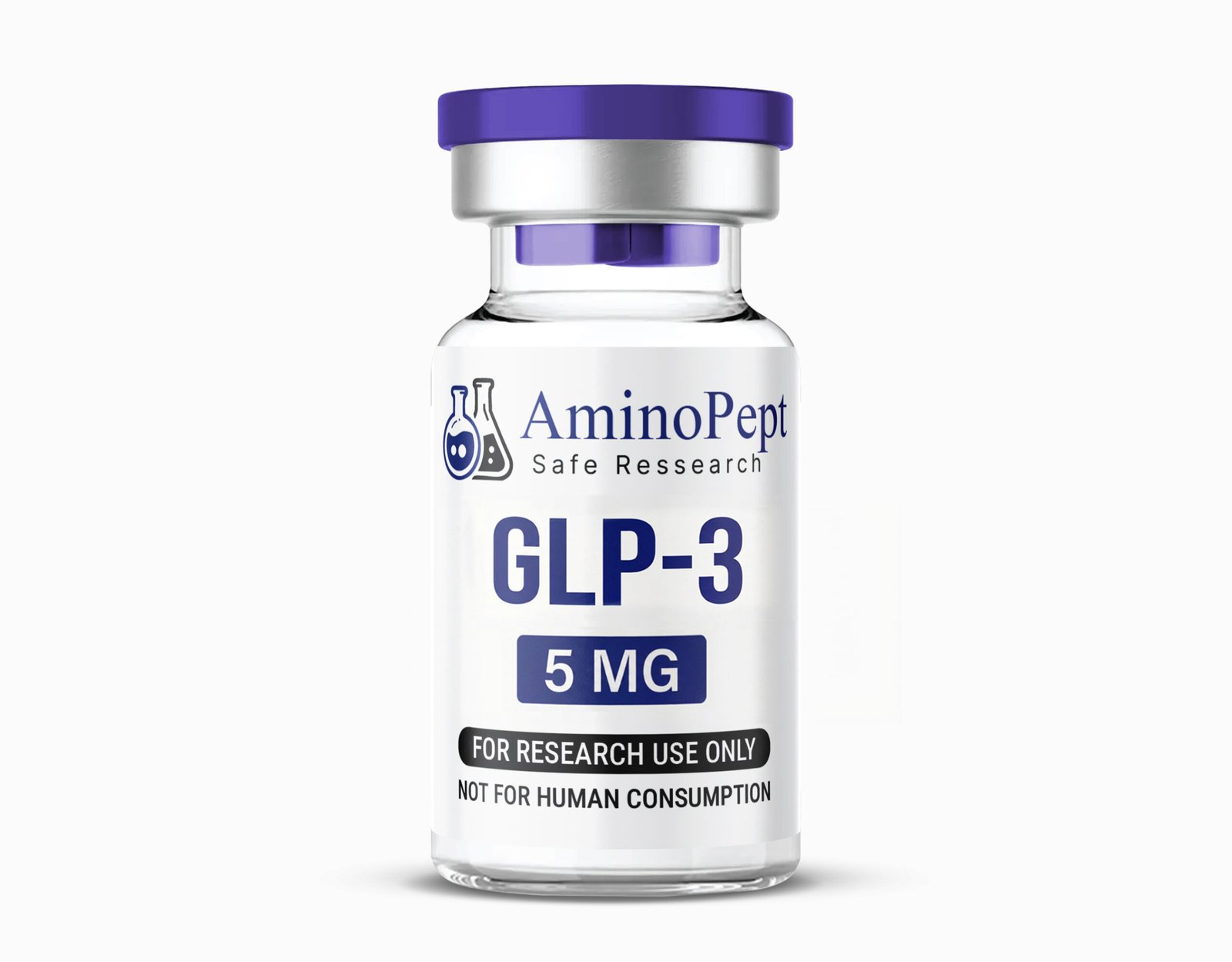
Retatrutide is a synthetic peptide designed as a triple agonist of three distinct G protein-coupled receptors: the GLP-1 receptor (GLP-1R), the glucose-dependent insulinotropic polypeptide receptor (GIPR), and the glucagon receptor (GCGR). This triple receptor engagement profile distinguishes it from GLP-1 mono-agonists and GLP-1/GIP dual agonists, and has made it the subject of significant scientific interest as a research tool for studying the combined biology of the incretin and glucagon receptor systems. In research contexts, Retatrutide may be referred to as GLP-3, reflecting its triple agonist mechanism.
Scientific Background: The Three Receptor Systems
To understand the research significance of Retatrutide, it is necessary to appreciate the distinct biological roles of each of its three target receptors.
GLP-1 receptor: As described in the GLP-1 research overview, the GLP-1R is a class B GPCR expressed in the pancreas, brain, cardiovascular system, and gastrointestinal tract. GLP-1R activation enhances glucose-dependent insulin secretion, suppresses glucagon, slows gastric emptying, and activates central satiety circuits — a well-characterised receptor profile with extensive preclinical and clinical research supporting.
GIP receptor: The GIP receptor responds to gastric inhibitory polypeptide (also called glucose-dependent insulinotropic polypeptide), another incretin hormone secreted by K-cells of the duodenum and jejunum in response to nutrient intake. GIPR is expressed in the pancreas, adipose tissue, bone, and the brain. Like GLP-1R, GIPR activation enhances glucose-dependent insulin secretion, but through distinct intracellular signalling. Additionally, GIPR activation in adipose tissue has been shown in research to influence lipid metabolism and fat storage dynamics.
Glucagon receptor: Glucagon is a pancreatic peptide hormone primarily associated with hepatic glucose output and fat mobilisation. While glucagon receptor activation in isolation raises blood glucose — apparently counterproductive in a metabolic research context — research has established that GCGR activation also increases energy expenditure and promotes fat oxidation. In the context of a triple agonist, the glucagon component is proposed to contribute metabolic benefits — particularly in the area of energy expenditure and hepatic fat metabolism — that offset its glycaemic effects through the simultaneous GLP-1R-mediated enhancement of insulin secretion.
Molecular Structure and Chemical Profile
| Specification | Data |
| Common Name | Retatrutide / GLP-3 |
| Mechanism | GLP-1R / GIPR / GCGR triple agonist |
| Target Receptors | GLP-1R, GIPR, GCGR |
| Molecular Weight | ~4800 g/mol |
| Appearance | White lyophilized powder |
| Solubility | Soluble in bacteriostatic water |
| Storage (Lyophilized) | -20°C, stable up to 24 months |
| Storage (Reconstituted) | +4°C, use within 4 weeks |
| Key Structural Features | Fatty acid modification for albumin binding; DPP-4-resistant sequence |
| Purity (Research Grade) | >99% by HPLC |
Triple Agonism: Mechanistic Research Rationale
The scientific rationale for studying triple receptor agonists stems from research suggesting that the individual receptor systems — GLP-1R, GIPR, and GCGR — may have synergistic metabolic effects when co-activated, with each contributing distinct but complementary mechanisms.
Research in rodent models has examined whether the energy expenditure-promoting effects of glucagon receptor activation can be captured in combination with the insulin-sensitising and appetite-suppressing effects of GLP-1R activation, with GIPR activation potentially contributing additional adipose tissue effects. The mechanistic interplay between these three receptor systems is an active area of investigation, and Retatrutide represents a valuable research tool for probing these interactions.
Energy Expenditure Research
A particularly distinctive aspect of the triple agonist research profile is the proposed contribution of GCGR activation to energy expenditure. In vitro studies using brown adipocyte preparations have reported that glucagon receptor activation increases thermogenesis markers, including UCP1 expression, under controlled experimental conditions.
Animal model research has examined whether GCGR-mediated increases in energy expenditure contribute to the net metabolic phenotype observed with triple agonist treatment compared to mono- or dual agonists. These studies have reported effects on basal metabolic rate and respiratory quotient consistent with enhanced fat oxidation, though the mechanistic dissection of GCGR versus GLP-1R contributions remains an ongoing area of research.
Hepatic Metabolism Research
The glucagon receptor component of Retatrutide’s profile is also relevant to hepatic metabolism research. Glucagon receptor activation in hepatocytes stimulates glycogenolysis and gluconeogenesis, but also promotes hepatic fat oxidation through mechanisms including activation of AMP-activated protein kinase (AMPK) and stimulation of fatty acid beta-oxidation pathways.
Research in rodent non-alcoholic fatty liver disease (NAFLD) models has examined whether glucagon-mediated hepatic fat oxidation, combined with GLP-1R-mediated effects on insulin sensitivity, produces beneficial effects on hepatic steatosis markers. Retatrutide has been used as a research tool in these experimental contexts.
Comparison with Mono- and Dual Agonists
| Specification | Data |
| Compound Class | Receptor Targets |
| GLP-1 mono-agonist | GLP-1R only |
| GLP-1/GIP dual agonist | GLP-1R + GIPR |
| GLP-1/GCGR dual agonist | GLP-1R + GCGR |
| GLP-1/GIP/GCGR triple (Retatrutide) | All three |
Laboratory Handling
| Specification | Data |
| Reconstitution Solvent | Bacteriostatic water |
| Lyophilized Storage | -20°C in sealed vial |
| Reconstituted Storage | +4°C, use within 4 weeks |
| Handling Notes | Fatty acid-modified peptide; gentle mixing preferred; avoid vigorous agitation |
| Freeze-Thaw | Minimise; pre-aliquot for multiple experiments |
Note: Retatrutide (GLP-3) is available from Aminopept for laboratory research use only. This is not an approved therapeutic compound. All information is for scientific and educational reference.
——————————————————————————————————-
GLP-3 is available in research-grade, lyophilized form from the Aminopept research catalogue. Supplied for laboratory and in-vitro research use only.
→ View GLP-3 in the research catalogue
Leave a Reply